
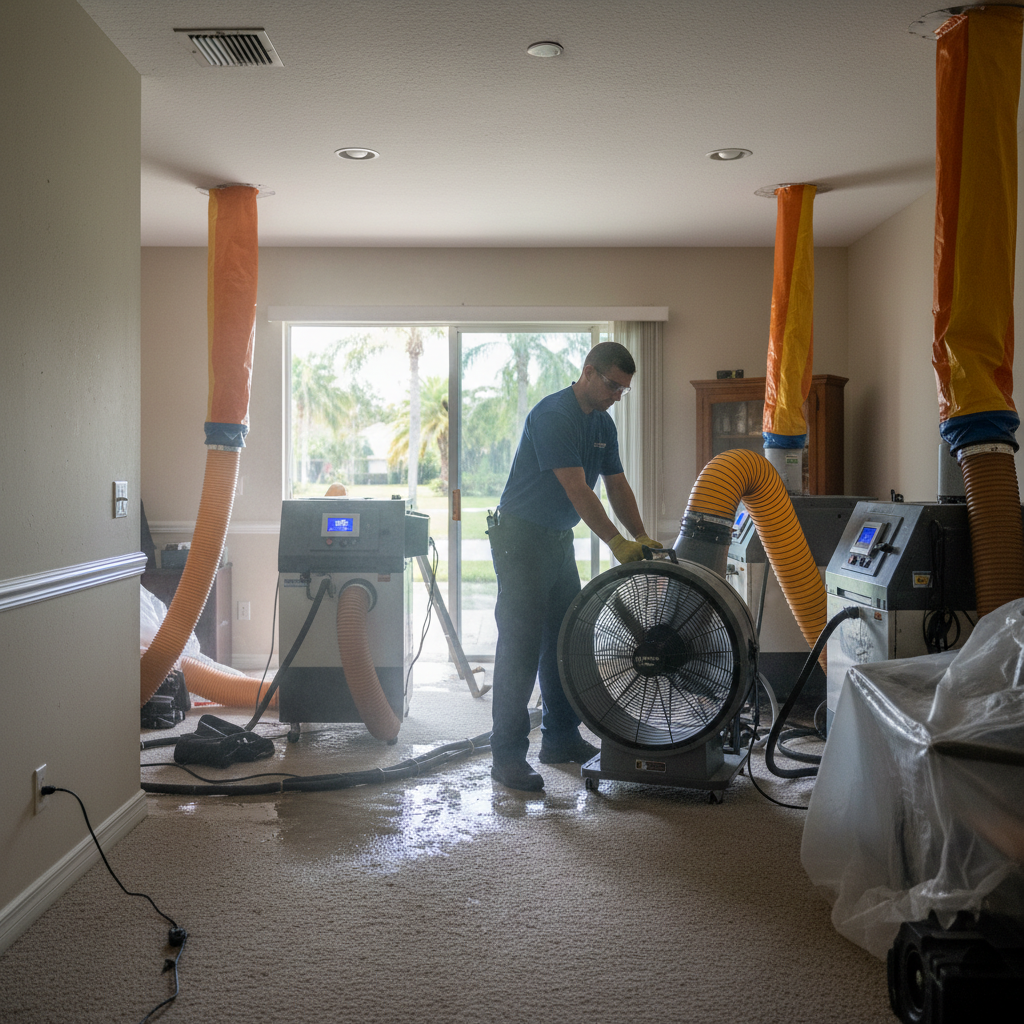
Tampa's humid subtropical climate keeps relative humidity above 70 percent for much of the year, so standing water left after storms or appliance leaks quickly drives moisture into wood framing, plaster, and concrete slabs common in Ybor City and Seminole Heights homes. David Mitchell's crews use industrial air movers and low-grain refrigerant dehumidifiers sized for the square footage and construction type rather than generic formulas. Without rapid moisture removal, hidden saturation behind baseboards or under tile can trigger mold within 48 hours and trigger insurance denials for preventable secondary damage.
Older Tampa properties often contain lath-and-plaster walls and heart-pine floors that absorb and release moisture slowly, creating edge cases where surface readings appear dry while interstitial humidity remains elevated. Technicians place moisture meters at multiple depths and use thermal imaging to locate trapped water around plumbing chases and HVAC returns. Florida Building Code requires documented drying before repairs; skipping this step can void permits and leave homeowners exposed to future claims.
Damage Restore Pro covers all Tampa neighborhoods from the Riverwalk to Busch Gardens corridors, coordinating with local inspectors on moisture documentation required for certificate of occupancy after substantial repairs. Crews adjust equipment daily because afternoon thunderstorms can reintroduce humidity even after initial extraction. This localized approach prevents the callbacks that occur when standard statewide protocols ignore Tampa's specific terrain and micro-climates.
Technician insight
David Mitchell has observed that Ybor City plaster walls often require an extra 48 hours of targeted drying compared with modern drywall. Afternoon storms can reset progress if equipment is undersized for the local humidity load.
Drying and Dehumidification Services Services We Offer
✓Industrial Air Mover Placement
Strategic positioning of high-velocity air movers creates directed airflow across wet materials to accelerate evaporation without spreading contaminants.
✓Low-Grain Refrigerant Dehumidification
High-capacity LGR units pull moisture from the air in Tampa's humid conditions, maintaining target grains per pound to protect wood and drywall.
✓Desiccant Dehumidifier Deployment
Heat-driven desiccant systems handle extreme humidity events common after summer storms when standard refrigerant units lose efficiency.
✓Moisture Mapping And Monitoring
Daily meter readings and data logging document drying progress for insurance adjusters and meet Tampa permitting requirements.
✓Hidden Cavity Drying
Injection drying and negative-pressure setups reach behind walls and under cabinets where Tampa's older construction traps water.
Drying and Dehumidification Services Cost in Tampa
| Service | Typical Range | What Affects It |
|---|---|---|
| Single-room drying | $350–$650 | Depends on material type and hidden cavities |
| Whole-home drying | $1,200–$2,800 | Influenced by square footage and multi-story access |
| Desiccant upgrade | $400–$900 | Added for high-humidity events or porous materials |
| Extended monitoring | $150–$300/day | Required when drying exceeds four days |
Ranges are typical for Tampa and confirmed with an exact written quote before any work starts.
How it works
- 1
Initial Assessment
Technicians map all affected materials and establish baseline moisture readings specific to Tampa construction types.
- 2
Equipment Setup
Air movers and dehumidifiers are positioned and calibrated for the property's square footage and current humidity levels.
- 3
Daily Monitoring
Readings are recorded every 24 hours with adjustments made as moisture levels drop.
- 4
Final Verification
All materials are retested to confirm they meet industry dry standards before equipment removal.