
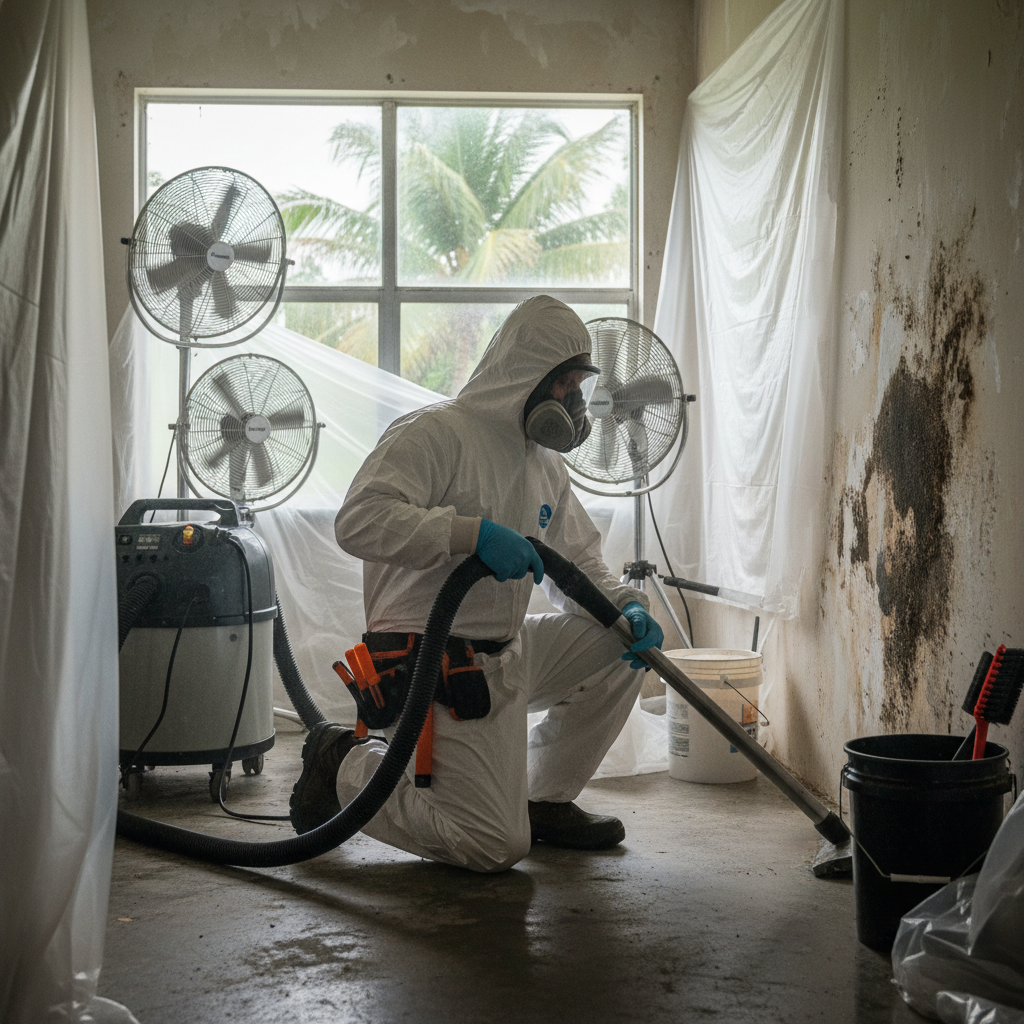
Tampa's humid subtropical climate drives year-round mold risk, with average humidity above 70 percent allowing spores to colonize drywall, insulation, and wood framing within 24 to 48 hours after any water event. Older housing stock in districts like Ybor City often features lath-and-plaster walls and unconditioned attics that trap moisture from roof leaks or condensation, creating hidden colonies that spread through shared HVAC ducts. David Mitchell emphasizes rapid containment because untreated growth in these structures can compromise structural integrity and trigger respiratory issues for residents.
Professional remediation requires source removal rather than surface cleaning alone; technicians use negative-air machines and HEPA filtration to capture spores while excising affected porous materials such as carpet padding and ceiling tiles. In flat, low-lying Tampa neighborhoods near the Riverwalk, recurring groundwater seepage demands moisture mapping with thermal imaging and pin meters to locate hidden saturation behind cabinets or under slabs. Florida building codes require documentation of moisture levels below 15 percent before reconstruction, a standard Damage Restore Pro follows to prevent callbacks.
Coverage extends across Tampa including Ybor City, Seminole Heights, and South Tampa where flood cleanup often precedes mold work after tropical storms. All work adheres to IICRC S520 protocols without reliance on unverified credentials, focusing instead on verifiable drying logs and post-remediation air sampling. This approach addresses the specific terrain and construction challenges that generic statewide methods overlook.
Technician insight
Tampa's flat terrain and frequent afternoon thunderstorms mean many homes develop mold under slabs or in wall cavities that only surface weeks after the initial leak. David Mitchell notes that skipping proper negative-air setup in these older plaster homes quickly spreads spores into adjacent units.
Mold Remediation Services Services We Offer
✓Black Mold Removal
Containment and excision of Stachybotrys colonies common in water-damaged Tampa drywall and baseboards to eliminate mycotoxin sources.
✓Attic Mold Remediation
Inspection and treatment of mold in Tampa attics where poor ventilation and roof leaks combine with high humidity to foster hidden growth.
✓HVAC Mold Cleaning
Ductwork decontamination and coil treatment that prevents spore recirculation through Tampa homes' central air systems after water intrusion.
✓Crawl Space Mold Treatment
Vapor barrier installation and dehumidification in Tampa crawl spaces to stop moisture-driven mold from migrating into living areas.
✓Post-Flood Mold Remediation
Full drying and removal protocols following Tampa flooding events that saturate carpets, walls, and insulation in low-lying neighborhoods.
Mold Remediation Services Cost in Tampa
| Service | Typical Range | What Affects It |
|---|---|---|
| Small contained area (<100 sq ft) | $800–$1,800 | Limited to one room, no HVAC involvement |
| Attic or crawl space remediation | $1,500–$3,500 | Access difficulty and ventilation upgrades |
| Whole-home HVAC system cleaning | $1,200–$2,800 | Duct length and coil contamination level |
| Post-flood multi-room treatment | $2,500–$6,000 | Square footage, material types, and drying duration |
Ranges are typical for Tampa and confirmed with an exact written quote before any work starts.
How it works
- 1
Inspection
Moisture mapping and air sampling identify all affected areas in the Tampa property.
- 2
Containment
Negative pressure barriers isolate the work zone to prevent spore spread.
- 3
Removal
HEPA vacuuming and excision of contaminated porous materials.
- 4
Drying
Industrial dehumidifiers reduce moisture below 15 percent.
- 5
Verification
Post-remediation sampling confirms clearance before reconstruction.